When Silence Screams: Why ‘The Girlfriend’ is Rahul Ravindran’s Bravest Film Yet!

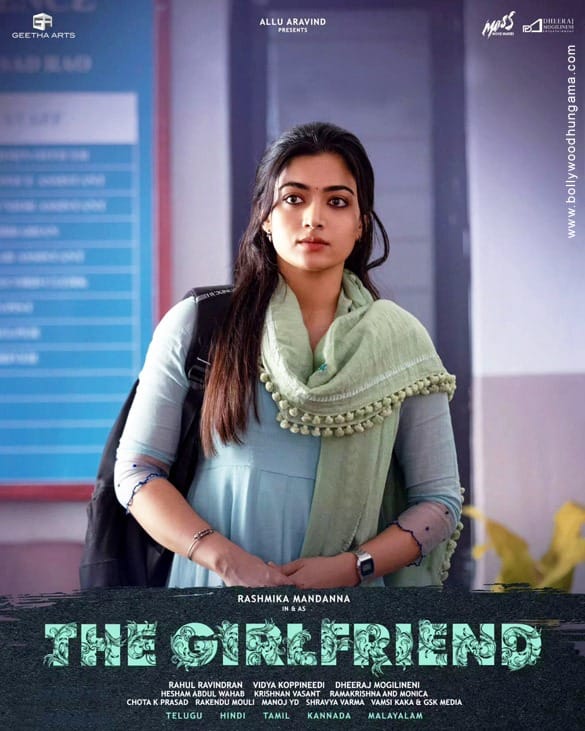
I still remember watching Andala Rakshasi back in 2012. There was this specific sincerity in Rahul Ravindran’s eyes as an actor—a quiet sort of honesty that stood out even back then. When he shifted to direction with Chi La Sow, that honesty didn't disappear; it just moved behind the camera. He has always been a filmmaker who seems more interested in "moments" than "mass elements."
But with The Girlfriend, Rahul has done something different. He hasn't just made a love story; he made a psychological mirror.
I walked into the theater expecting a romance. I walked out realizing I had just watched one of the most terrifyingly real breakdowns of a relationship in Telugu cinema history. This isn't a review. This is an appreciation of a film that dares to be quiet in a world that loves noise.
The "Nice Guy" is the Scariest Villain
We need to talk about Vikram (Dheekshith Shetty). In most of our films, the "toxic boyfriend" is easy to spot. He yells, he hits, he breaks things. But Rahul writes Vikram differently. Vikram is terrifying because he is so... calm.
He is the guy who brings you coffee. He is the guy who drops you home. He is the guy everyone’s parents love. Dheekshith plays him with such a disturbing mix of charm and control that for the first hour, even the audience is tricked.
There is a scene where Vikram cuts off a friend from Bhooma’s life. He doesn't do it with a scream; he does it with a smile, convincing her it is "for her own good." As an actor, watching Dheekshith walk that tightrope is a lesson. If he had played it 1% more aggressively, he would have looked like a movie villain. Instead, he played it like a real person, which makes it ten times scarier.
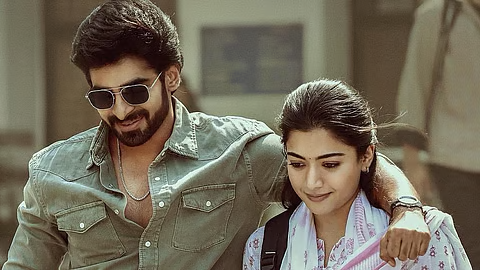
What makes this performance brilliant is Dheekshith’s body language. Usually, villains occupy space to show dominance—they spread their arms, they stride confidently. But Vikram invades Bhooma’s space softly. He leans in too close, he holds her hand a second too long. It’s a masterclass in how "love bombing" looks from the outside versus how it feels from the inside.
The "Headlight Eyes" Theory
I read somewhere that Rahul calls Rashmika Mandanna "Headlight Eyes," and after watching this film, I cannot agree more. He needed someone whose eyes could be completely transparent, and Rashmika delivers a performance that should be studied in acting schools.
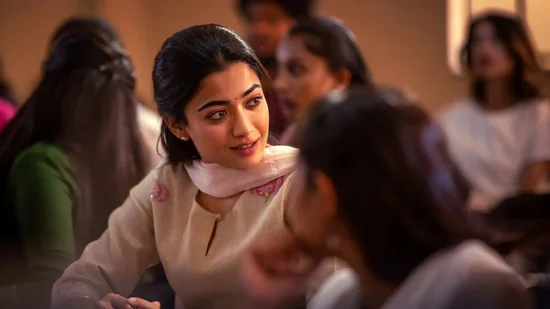
Bhooma is an introvert. She doesn't have punch dialogues. She doesn't fight back immediately. So, how do you show her pain? You show it through the eyes.
- The Mirror Scene: Watch Rashmika when she looks at herself in the mirror. No dialogue. Just her face shifting from confusion, to realization, to absolute exhaustion. It’s rare to see an actor trust the camera enough to do nothing but think in a shot.
- The Flinch: Watch the way she physically shrinks when Vikram touches her shoulder in the second half.
It takes a lot of guts for a mainstream star to be this vulnerable. She isn't trying to look pretty; she is trying to look trapped. It is a performance stripped of all vanity. We are used to Rashmika speaking fast, full of energy. Here, she uses pauses. She lets the silence hang in the air, making us wait for her words just as anxiously as Bhooma waits for Vikram’s approval.
Durga (Anu Emmanuel): The Road Not Taken
I have to take a moment to appreciate Anu Emmanuel (Durga). In most love stories, the "other girl" is just there to create jealousy. But Rahul writes her as something far more interesting: The Reality Check.
The brilliance of the script lies in the fact that Vikram explicitly chose Bhooma over Durga. Why? Because Durga is confident, stylish, and speaks her mind. A controller like Vikram is naturally threatened by a woman he cannot dominate.

I loved the subtle power dynamic Anu brought to the screen. She plays Durga with a "quiet confidence"— she doesn't scream at Vikram, she just observes him. And that observation is terrifying to a guy like him because he knows she sees right through him. While Bhooma is lost in his manipulation, Durga becomes the anchor keeping her attached to reality. It is a matured, grounded performance, and her transition from Vikram's friend to Bhooma's protector was the emotional pivot the film needed.
Writing Women Realistically
Another thing I truly appreciated is how Rahul wrote Bhooma’s character arc. In lesser films, the "shy girl" suddenly transforms into a warrior in one song. But that’s not how real life works.
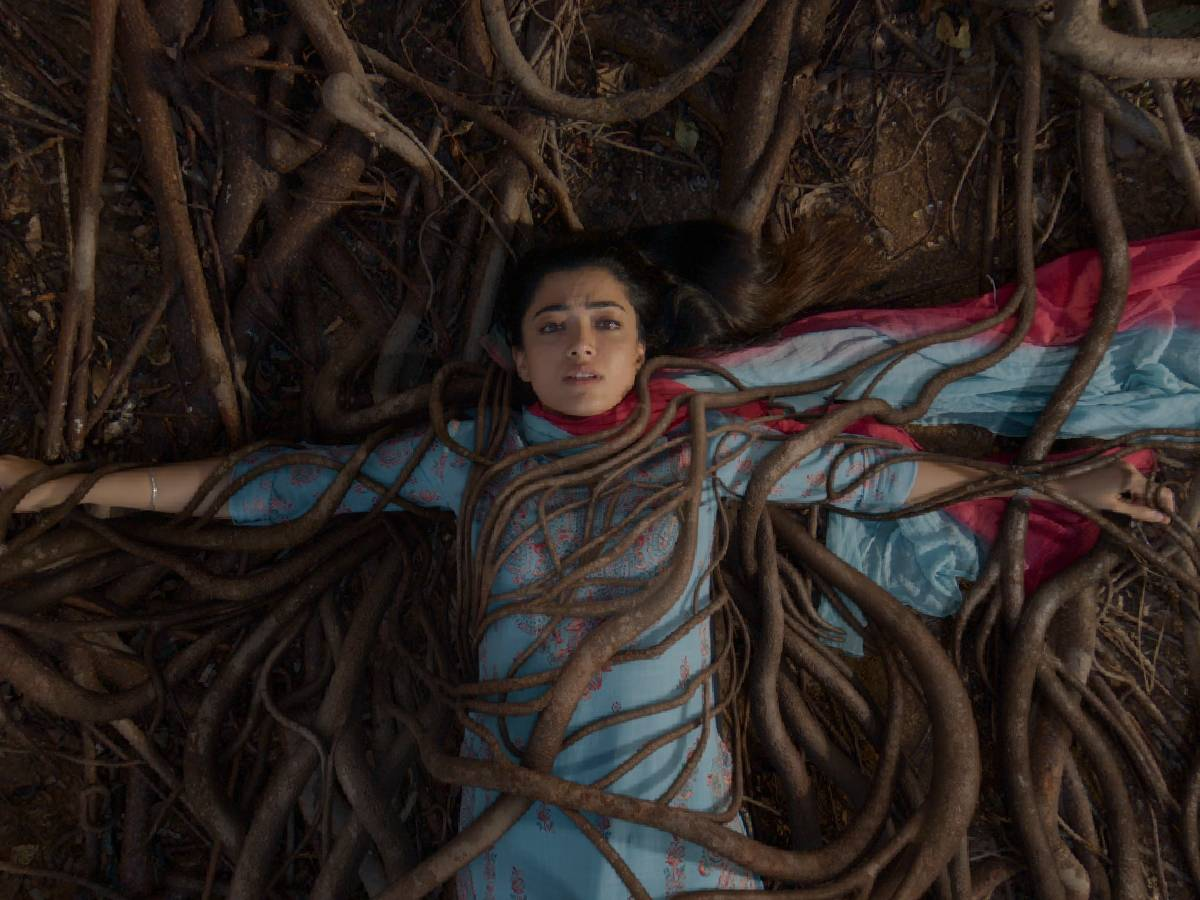
Rahul respects the psychology of trauma. Bhooma doesn’t wake up one day and decide to fight. She doubts herself first. She wonders if she is the problem. That confusion is heartbreakingly real. The writing allows her to be weak before she finds her strength, and that makes the third act feel earned, not staged. It’s a character study, not just a plot device.
Storytelling Through Claustrophobia
What I love about Rahul as a director is that he uses the camera to tell you how to feel.
In the beginning, the frames are wide. The world feels open. The colors are warm. But as Vikram’s control over Bhooma tightens, the camera literally starts closing in. The frames get tighter. The lighting gets dimmer. You start feeling suffocated just watching it.
There is some brilliant "blocking" (actor movement) in the indoor scenes. Notice how often Vikram stands between Bhooma and the door? He is never blocking her path aggressively, but he is always there, lurking in the negative space of the frame. It subconsciously tells the audience: there is no exit.
And the music? It’s not there to tell you when to cry. The background score often sounds like a heartbeat—sometimes racing with anxiety, sometimes dull and heavy. It respects the audience enough to let us feel the tension without forcing it.
Why This Film Will Age Well
Some might find the pace slow, but I think that’s the point. Gaslighting doesn't happen overnight. It is a slow, creeping poison. Rahul takes his time because he wants us to feel that suffocation along with Bhooma. If the movie was fast-paced, we would miss the subtlety of the manipulation.
The Girlfriend is a film that asks uncomfortable questions. It asks us to look at the relationships around us—or maybe even at ourselves—and ask: Is this love, or is this just control and ownership?
It is rare to see a Telugu film that trusts silence this much. It doesn't rely on mass dialogues to make a point; it relies on the intelligence of its audience. It is a brave, difficult, and necessary piece of cinema.
Thank you, Rahul, for making this! You’ve reminded us that sometimes, the most powerful cinema is the quietest ❤️